

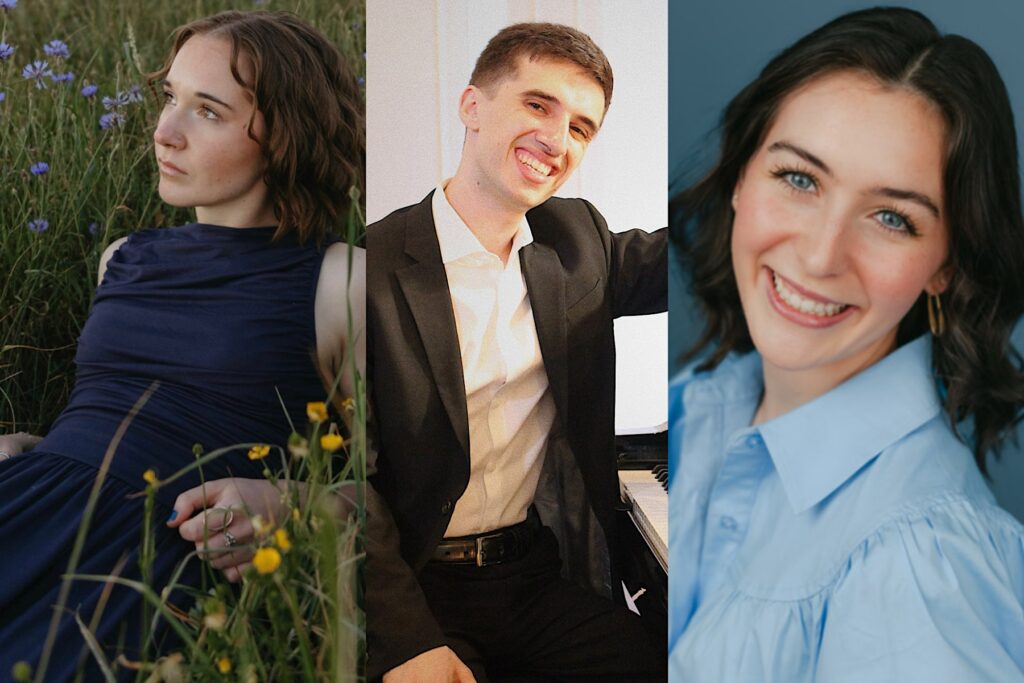
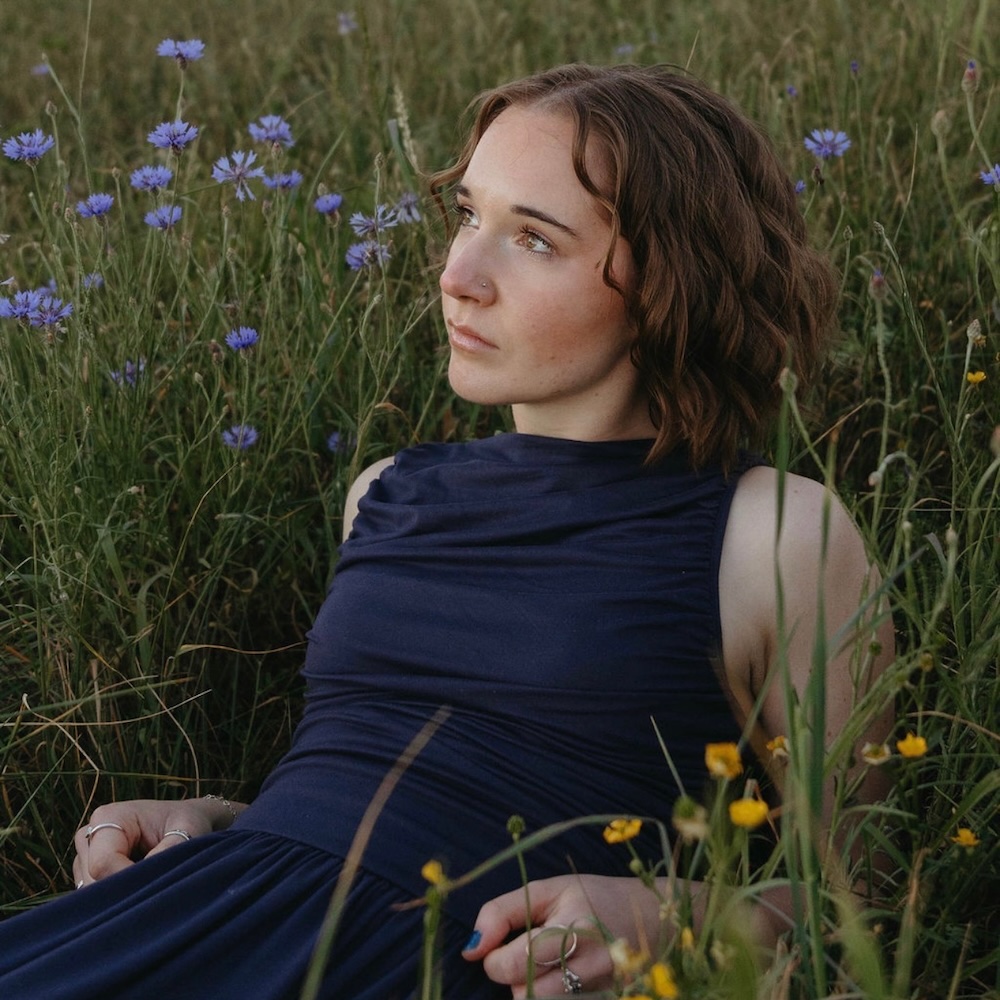
Scarlett Freeman
Scarlett Freeman, a 2026 Commercial Music alumna, has been invited to the College of Music Society’s 2027 International Conference in Reykjavik, Iceland. There she will present her paper titled: The Indigo Project: A Testament to the Healing and Community Found in Music, which tells the story of six domestic violence and relationship abuse victims. Freeman organized a benefit concert in the spring of last year where some of the abuse victims performed and presented their stories, raising money for a domestic violence shelter. You can find out more about Scarlett and hear her music here.
AU: What made you decide to come to Anderson University and major in commercial music?
SF: I have always loved songwriting. That’s been my greatest passion and just the way that I always have dealt with the world and emotions and all of that, and I felt it was truly a gift from the Lord to help me deal with life. My hope was to become a songwriter, and I figured that a degree in commercial music would be just perfect in equipping me on how to handle the music industry. It taught me self-promotion in business as well as the practical skills of actual songwriting and production, vocal and piano. All of those things I got to learn were fantastic.
AU: What led you to Anderson University?
SF: I chose Anderson University because the worship leader at my church back home actually went there, and she mentored me through middle of high school. I wanted to be like her, and I thought that if this school created someone like her, who’s just fiercely following the Lord and also so talented, then I have to go there. I went, and I was just overwhelmed by the presence of Jesus.
AU: Let’s talk about your senior project being accepted at the College Music Society’s 2027 International Conference in Iceland.
SF: For my senior project, I did an album called The Indigo Project. Essentially, I’m very passionate about helping survivors of domestic violence, and so, I interviewed some of the people I encounter who were survivors. I wanted to raise awareness of the issue of domestic violence or any form of relationship abuse, because it’s just so prominent, and I didn’t even realize it until it happened to me.
So, I really wanted to shed light on that issue, and also, if these ladies had a chance to have a voice, because they had been silenced for so long, I just wanted to share their stories and their wisdom but also take that opportunity to hopefully point other survivors to Jesus and just remind them that there is hope.
We did a little benefit concert in the spring of, I believe last year. Some of these ladies came and performed. They presented their story. We raised some money for a local domestic violence shelter called Safe Harbor. That was a really cool experience.
And then Dr. Cordoba recommended that I send it to the College Music Society. I didn’t think they would ever accept it, but I was very pleasantly surprised to learn a couple months later that they did. I’m excited about the opportunity to go and talk to this organization about my project, and hopefully also get to share the gospel with this group of people.
AU: Now that you’ve graduated, what’s next?
SF: Right now, I’m living at home and I teach music to kids at On Stage School of Performing Arts in Charlotte. I think I’m learning patience very quickly with these kids. My goal is to eventually move overseas to do grad school. I love travel and would love to have the opportunity to live overseas again, so I’m looking at the UK currently to study theology and hopefully start my own, either nonprofit or ministry or something of that sort to continue helping domestic violence victims. I wouldn’t trade it, just knowing the purpose and the calling He’s given me now.
AU: Share some memories of being at Anderson.
SF: It was definitely the best four years of my life so far. I just loved it so much. I would be a perpetual college student if I could afford it. My experience with the professors, first and foremost, was incredible. They truly changed my life, changed the way that I view my work and my capabilities as a musician. They pushed me to do things I was afraid of.
Specifically, my voice professor, Dr. Killen, was practically my counselor as well as my vocal professor. He was so wise and helped me to think through what I truly wanted to do with my life and what I wanted to do with music. He’s so passionate about music and the health of a person as a whole. He really cares about every aspect of his students, which made learning music so much more fun, because you knew that your professors were looking out for you. And Dr. Cordoba also was always giving me opportunities to further my experiences and my knowledge. He let me lead our school’s Chiquola sessions, which were little singer-songwriter nights that we did. That was a blast. That was probably one of my favorite things I got to do in the music department—just getting to connect all of our talented songwriters in the music department with an outlet to share their songs with the community.
AU: Have you traveled outside the country before?
SF: Yes, I actually did a music internship in London last summer. It was amazing. I just liked the environment. It seemed so much more community-oriented, if that makes any sense. In the United States, I feel like we’re so independent. You can drive in your car by yourself to work, drive back home, and that’s that. But it felt like in London, at least where I was living, there was always something going on. You’d see people as you traveled on the tube (subway). You feel so much more connected with the community.
AU: Describe your musical style.
SF: It’s very, like, indie singer-songwriter, just pretty laid back, not a ton of instrumentation going on.
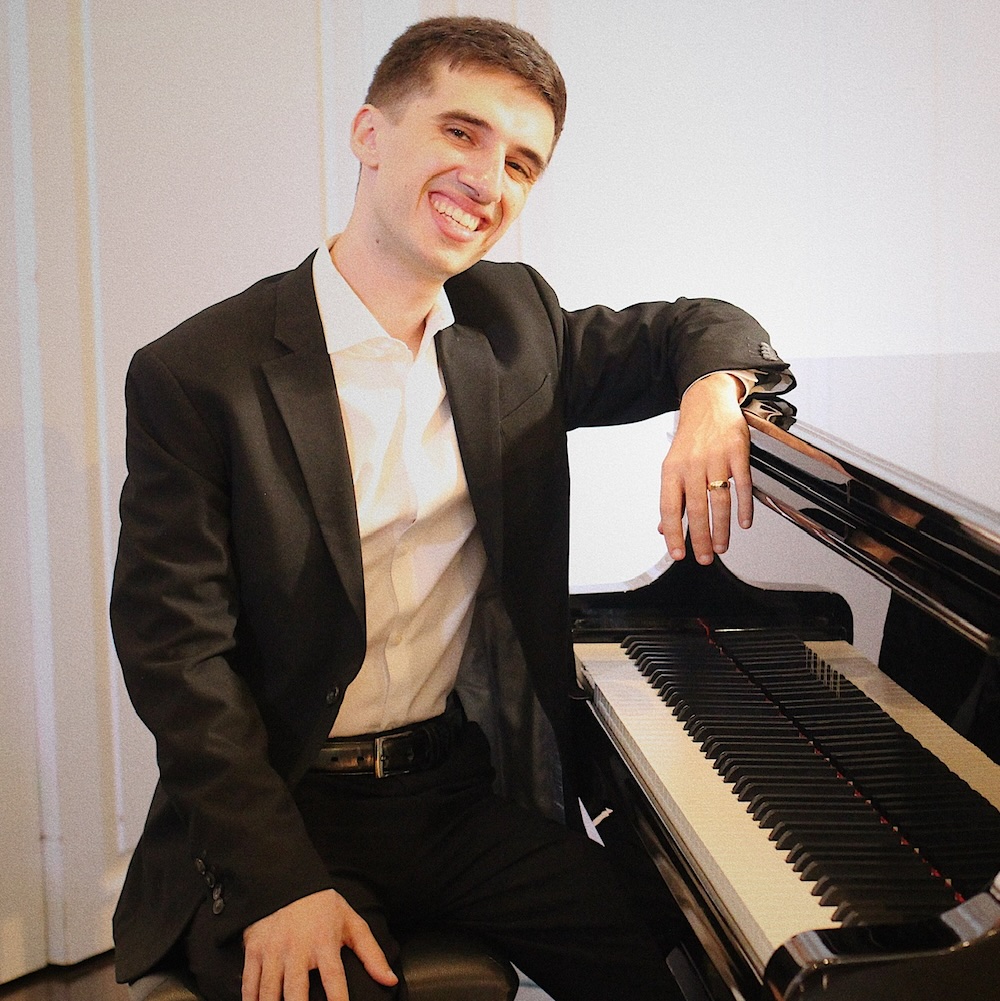
Max Milian
Max Milian was hired to be the Musical Director for Actors’ Playhouse at the Miracle Theatre’s month-long production of Jekyll & Hyde. He also recently performed in Miami with artist Yainer Horta, who won the Grammy for Best Latin Jazz Album earlier this year. Milian says his four years in the South Carolina School of the Arts at Anderson University not only improved his musicianship but also provided him with extensive experience managing talent and resources—something he’s now getting to do on a professional level.
AU: Let’s talk about your performance with a Grammy winner.
MM: Yainer Horta won the Grammy this past February for best Latin Jazz Album. I played with him at a party at a country club in South Florida for New Year’s Eve 2024. After the show we traded info.
I’m the music director at Granada Church; I’ve been working there for four years since graduating in 2022. Part of what I get to do is events at the church, and after services if we have a luncheon or a festival or something like that, I’ll provide live music. I hired (Horta) to come and we did a jazz quartet thing. He’s incredible, and it was an honor to share the stage with him
AU: What are some ways that your AU education has been helpful to you as you continue in your career?
MM: I was just telling one of the actors of our show recently about how unique my experience at AU was… We started rehearsals for Jekyll and Hyde (recently). This is my first music directing contract with a professional theater. To this point I’ve done educational theater and community theater, but I had not yet worked in professional theater. I’ve been upfront and honest about that with the people I’ve been working with, and the resounding sentiment has been, ”I cannot believe this is your first professional contract. I cannot believe this is your first time working in professional theatre.”
They were really impressed that this 26-year-old rookie was able to come into the rehearsal room and lead so efficiently and effectively—all the things that come with being a music director. I was having this conversation with this actor and was telling her that at the school I went to, Anderson University, I was able to music direct the premier commercial music ensemble AUthenticity all four years of college. I was running rehearsals multiple times a week. I was programming shows. It was really my time in AUthenticity more than anything else that prepared me to be the professional musician that I am today—performing, arranging and leading a team towards an articulated artistic vision.
Music directing was a skill that I honed before I entered the industry. I was 22 years old starting out my career and I was leading rehearsals, I was contracting musicians for performances, I was able to handle a leadership position which allowed me to be an entrepreneur immediately. I did not have to rely on whatever music directors would hire me to play or whatever theaters would hire me to perform or whatever opportunities I had to wait hear about. I could go out and make opportunities because I knew I was able to lead a room of musicians in a performance of any style, in any context.
That came about because of AU.
The central element was the plethora of opportunity that was given to me immediately and for all four years. I got so much practice at making mistakes in the rehearsal room, making mistakes on stage and learning from them in the educational context where it was low stakes and it did not cost me my career and it did not cost me my reputation… So I was already refined as a music director come graduation day. That was huge, because now these actors are saying “you have such a great attitude from the podium. You have such an affirming presence.”
AU: When you were looking at a college, what made Anderson stand out?
MM: I was really attracted to the idea of attending a school that was unashamed to put Christ as the utmost priority in one’s education and life. I toured non-Christian colleges and I toured Christian colleges, and the thing that stuck out to me about Anderson was that its faith wasn’t just a sticker… not just a label so that parents could feel safe. It was “we are here on mission, this is a ministry, we love the Lord more than anything and we want to orient our students toward a God-honoring career in whichever field they choose to study.”
I knew that the university I chose to attend would affect the type of person I would be when I graduated. I wanted to be in a place that would invest in and grow that side of my faith, that side of who I am.
AU: So, let’s talk about your professional gig.
MM: We’re doing 21 shows from October 7 to November 1 at Actors’ Playhouse at the Miracle Theatre. It’s a really exciting opportunity. I’m in week two of the three week rehearsal process. Putting a show together in three weeks is quite the task that needs consummate professionals to pull off.
It’s a rigorous schedule, but it’s really enjoyable, and so I’m happy to be where I’m at right now.

Harper Krimm Stiles
Harper Krimm Stiles currently attends Michigan State University where she’s working on a master’s degree in jazz performance and was selected to be the vocalist for the “Nonet 1,” which is the premiere touring small jazz ensemble at MSU. She’s excited about collaborating with legendary bassist John Patitucci during his guest artist series.
AU: Catch us up on what’s going on in your life:
HKS: On August 2 I got married to another AU alumni, Benji Stiles. He graduated in ’25 with a BM in Commercial Music. He’s a bassist. We both moved to Michigan and he’s doing his master’s at Michigan State as well. We’re in the same program.
The week we moved up here, I had an opportunity to audition for ensembles. MSU has a ton of jazz ensembles. They have jazz orchestras and smaller touring ensembles called nonets. I was accepted as the vocalist to their premiere nonet that gets to tour. Last year, this group went to Jazz at Lincoln Center in New York. I think either last year or two years ago, they got to go to Japan for a jazz festival and perform. We haven’t gotten our tour dates yet, but we’re going to collaborate with some guest artists.
We’re going to be working with Leonard King, who’s a jazz drummer; Peter Martin, who’s a pianist; and then the really big name that they’re bringing in to collaborate with us this year is John Patitucci, he’s a bassist and really, really well known in the jazz community. I’ll get to collaborate with some amazing people that are going to come in and work with us.
All of the graduate students get split into combos, which are groups of five to seven, and so I’m helping lead one of those groups. My nonet has some graduate students and some undergraduate students. I’ll also get a few opportunities to perform with their jazz orchestra this year. They have a couple special concerts that the vocalists get to have pieces arranged for them, and we get to sing with the jazz orchestra as well. So there are so many opportunities to perform and there’s so many opportunities to perform in this community.
Literally within three days of being here, we had people text us, “You should come to this club and sing a tune with my band.” And so we were just jumping in and getting to perform almost immediately, which was amazing. And then my applied instructor for voice is Carmen Bradford. She’s the vocalist for the Count Basie Orchestra and has been, I think, for over 20 years now. She is a legend in the jazz world. Every single lesson with her is just super eye opening, and I’m learning so much about all of the rich history of the music.
AU: How do you do you feel that your professors at Anderson University prepared you for this next step?
HKM: I think the biggest thing for me, when choosing to come to Anderson, was that I knew Professor Deirdre Welborn and the other faculty had such a strong reputation for providing strong classical technique, and I think, especially as a vocalist, it’s extremely important to develop that because your instrument is your body, and I feel like all of the faculty at AU really support that initiative, to just make sure we all have a really strong musical foundation when we leave the program, so that if we do choose to get a second degree, we already have the tools that we need to be successful in that. So I feel like I was super well equipped in theory, and in my private lessons, and in all the ensembles that I was able to perform in while I was at AU, to just be able to dive in here and not have to worry about going back and working on the basics.
I was double majoring until my last semester at AU, so I was Voice Performance and Commercial Music, but I ended up graduating with a Voice Performance degree and a Commercial Music minor.
AU: And you’re close to Detroit, home of the Motown Sound.
HKS: We’re about an hour from Detroit, so a lot of events we’re a part of take place in Detroit. Even the events happening on campus. Next weekend I’m playing the President’s Tailgate, and he wanted strictly Motown and he hired the jazz musicians to do it. It’s definitely still a super big part of culture here, which is really exciting for me. I love Motown and Soul, and honestly, it’s a lot of what I got to do with AUthenticity, so it’s nice to be able to tap into that sometimes, too.
AU: What advice would you give someone who wants to major in music but still trying to find their niche?
HKS: Something that I do not regret about my undergrad experience was how I just kind of said yes to everything. While I was technically a classical major, I was in the jazz band and I was peforming with AUthenticity, and I think whether you’re performing multiple genres of music or you’re just experiencing them, I think that it’s super important to develop your musicianship. It develops your ears and just an appreciation for all of the different types of sounds that are out there and the different cultures those sounds come from.
AU: What draws you to jazz, in particular?
HKS: I think all of the cultural elements that come with it are super fascinating. I think jazz has a strong following of a very specific type of musician, and I really appreciate the difference it has compared to classical music, or even pop music. It creates a different feeling in me when I’m performing it or if I’m listening to it. I’ve always been drawn to it. Both of my parents are classical musicians, so you would think that wouldn’t be the case because I wasn’t really exposed to it as much.
AU: What are your future plans
HKS: I hope to be teaching at a university. That’s my ultimate goal, but I would also like to be a touring musician—in the jazz world preferably, but I’m open.
About the Conservatory of Music
The South Carolina School of the Arts Conservatory of Music at Anderson University offers rigorous musical training in a wide variety of musical traditions, including Classical, Musical Theater, and Commercial Music.